
Key locations within Iona
Dunes
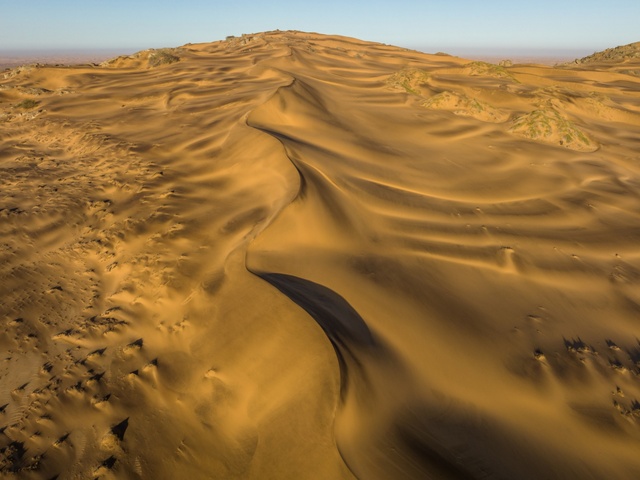
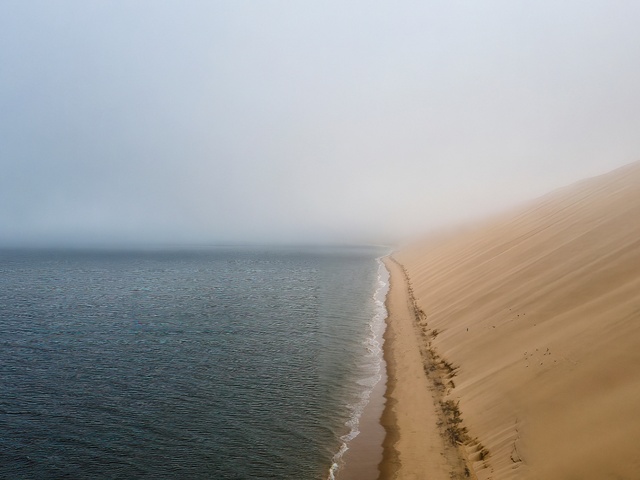
Striped with bands of titanium dioxide, the dunes almost reach the sea, with just a narrow strip of sandy beach protecting them from the waves.
Iona also has inland dunes, a dynamic landscape where sun and shade determine the rhythms of life.
Coastline
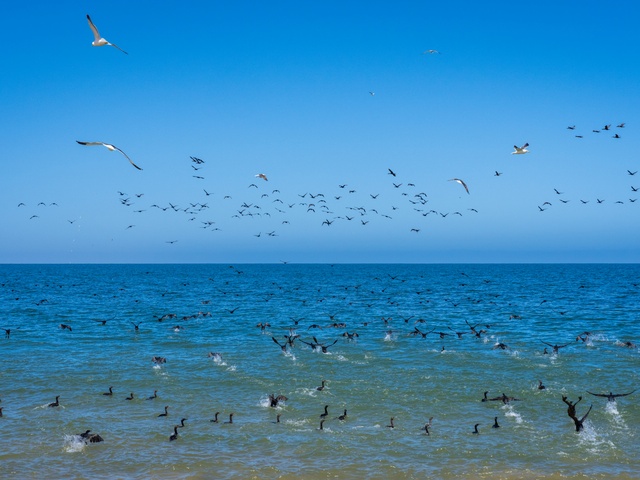
Iona National Park safeguards 160km of Atlantic coastline, including the Cunene river mouth and Ilha dos Tigres. This interface between desert, river and ocean ecosystems is rich in marine wildlife, including vast flocks of terns and cormorants.
Rivers
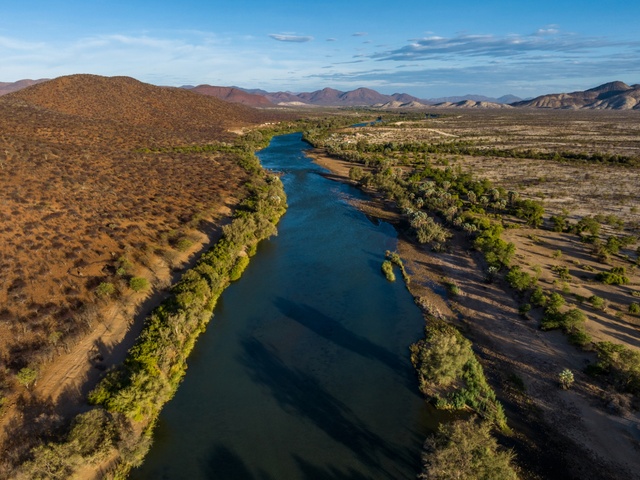
Iona’s arid nature is belied by the fact that its northern and southern boundaries are formed by rivers, namely the ephemeral Curoca (which exists as just pools of water for much of the year) and the permanently flowing Cunene. When the Curoca River is in flow, during and after periods of rainfall, it can be impossible to cross for several days at a time.
These rivers promote a contrasting green flush in their role as linear oases, and their banks are rich in birds and plant life.
Seasonal rainfall also causes the return of other ephemeral rivers, which cut alluvial gullies into the landscape before drying up again.
Espinheira
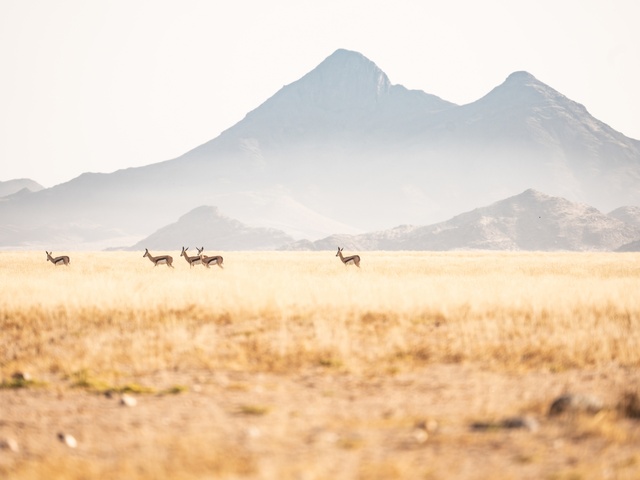
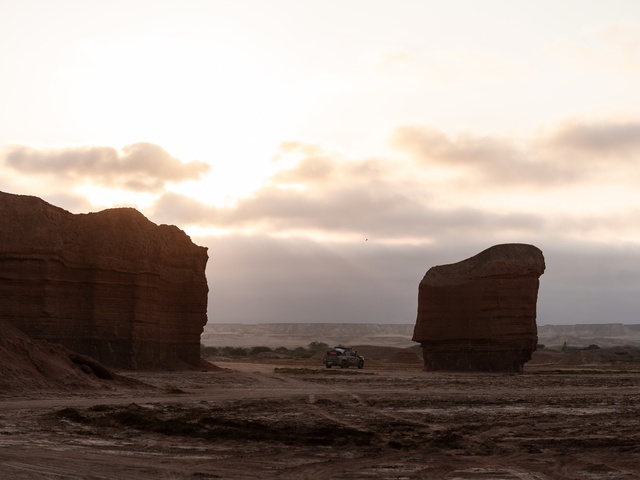
The former park headquarters is located amidst a gravel plain and ridges of low hills, and remains a focal point for park operations.
Foz du Cunene
The vivid green of the wetlands at the mouth of the Cunene River hints at their importance as an oasis and wildlife habitat, while the flow of freshwater entering the Atlantic adds nutrients to the ocean.
Colinas
These rugged rocky ridges located in the reserve next to the park are divided by canyons, where deep shade gives relief from the heat and shelter from the elements.
Wildlife
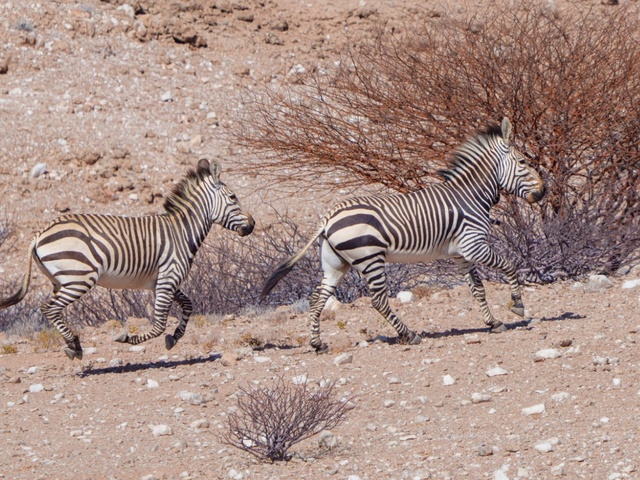
Iona is home to a great many species, some of which may surprise you by their presence. Along the coast, sightings can include black-backed jackal and brown hyaena tracks on the beaches, as well as large flocks of Endangered Cape cormorants and other seabirds, colonies of Cape fur seals, and green turtles at the Foz do Cunene.
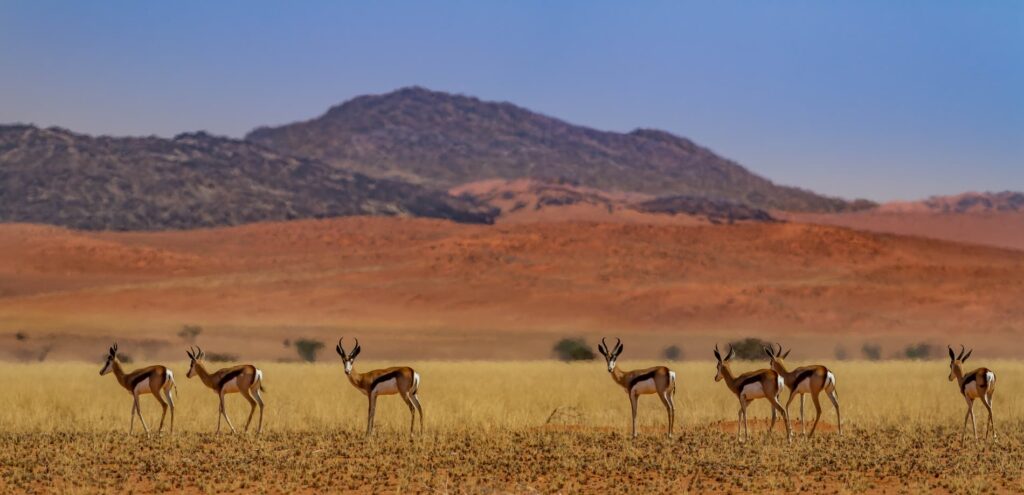
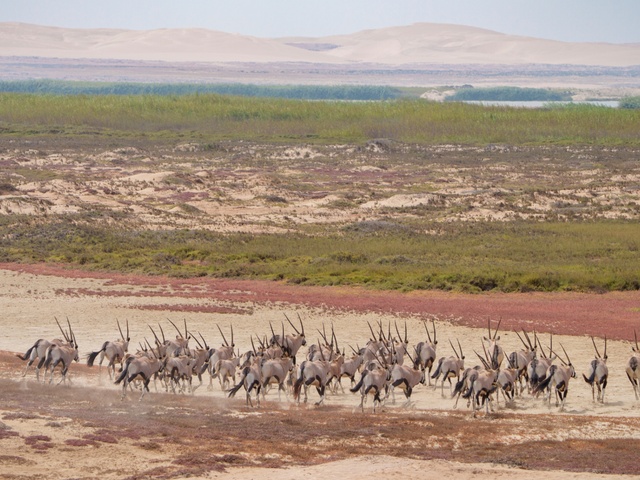
Inland, possible sightings include, oryx, springbok, smaller antelope (such as duiker), ostrich and giraffe, plus many different kinds of small mammal. Chameleons can sometimes be spotted on the gravel plains, while Iona is also home to cheetah and zebra, although these are only seen infrequently.
What makes Iona so special?
Iona delivers an authentic wilderness experience and is an ideal destination for anyone with a sense of adventure, and who values the freedom that comes with going off-grid. If you appreciate space and seclusion, but you’re open to being surprised as a landscape reveals its secrets, then Iona National Park is the perfect setting for your next remote journey.
Geology and Landscapes
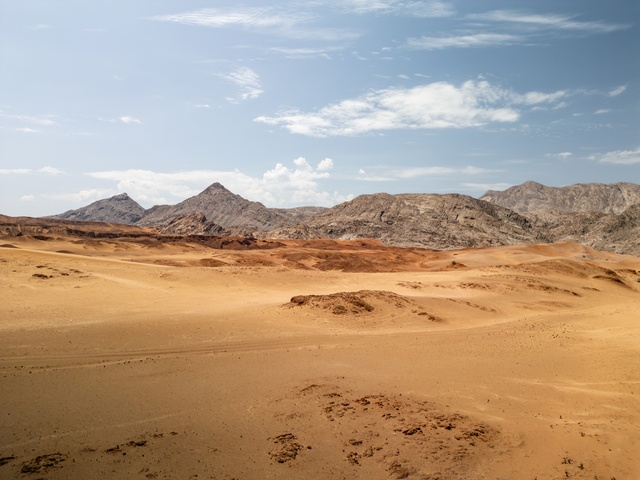
Iona, a continuation of the Namib Desert to the south, is a dynamic landscape unlike anywhere else on Earth. The arid climate has helped to preserve ancient landforms dating back tens of millions of years, while the transition from coastal dunes to inland granite inselbergs lends Iona a sense of drama carved out of sand and stone.
Iona’s geology contains clues about the breakup of prehistoric landmasses, and tells the story of the immense forces that shaped the edges of southern Africa when supercontinents were torn apart at the seams.
The differences between Iona and the Namib Desert on the Namibian side extend to all the way to the granular level, with Iona’s more varied sands containing a blend of eroded desert rock and grains that have been sorted and deposited by rivers.
Iona’s diverse topography encompasses shifting dunes, gravel plains, and dramatic mountain escarpments rising to over 2 000m in height. The way the sand drifts collide with the jagged rocks of the Tchamaline and Cafema mountains suggests the violence of the forces that shaped Iona, while the presence of rocky outcrops and sandy basins creates moisture traps that support a surprisingly high number of desert-adapted species of plant and animal.
Benguela Current
Iona lies at the northern edge of the Benguela Current System, where persistent winds and wave-driven processes contribute to coastal upwelling, bringing cold, nutrient-rich waters to the ocean surface. This natural “nutrient pump” supports exceptionally high marine productivity and helps make the waters along southern Angola an important biodiversity hotspot.
Iona’s coastal ecosystem is particularly complex due to the interaction between these cold, productive waters and warmer tropical waters from further north, as well as the freshwater influence of the Cunene River, the only major river reaching the sea along this otherwise arid coastline.
Together, these influences create productive coastal habitats that provide important nursery and spawning grounds for numerous fish species. The coast also provides an important stopover and feeding area for migratory shorebirds, including sanderlings and little stints. Sea turtles also use Iona’s coastline, particularly the Cunene river mouth (Foz do Cunene).
Although Iona lies within the greater Namib Desert region, its location further north means that the park also supports a range of other habitats including extensive savannah grasslands and patches of mopane woodland. This transition between desert, savannah and woodland contributes to the park’s exceptional diversity.